Since arriving from California two years ago to live and research Vienna’s renowned social housing system, I’ve had the privilege of living in an alternative housing model, and incredible community called Grüner Markt (Green Market). This experience has completely transformed my understanding of housing, urban design, and community.
Grüner Markt isn’t just my place of residence—it’s a community-driven model of housing that allows for connection and support in a world where raising a family can be a lonely experience, more smaller social connection is essential for mental health, or growing older can be an isolating experience. I would not say this development is what all housing should be, and many countries all around the world have cultures, needs, and urban landscapes that organically allow for intergenerational living and living in close connection. But before living at Grüner Markt I had no idea it was possible to create and plan the infrastructure for social connection and support within housing so eloquently. Learning about the ways my neighbors have developed the social foundations and even design of the building to meet our collective needs has transformed my understanding of housing, social design, and community.
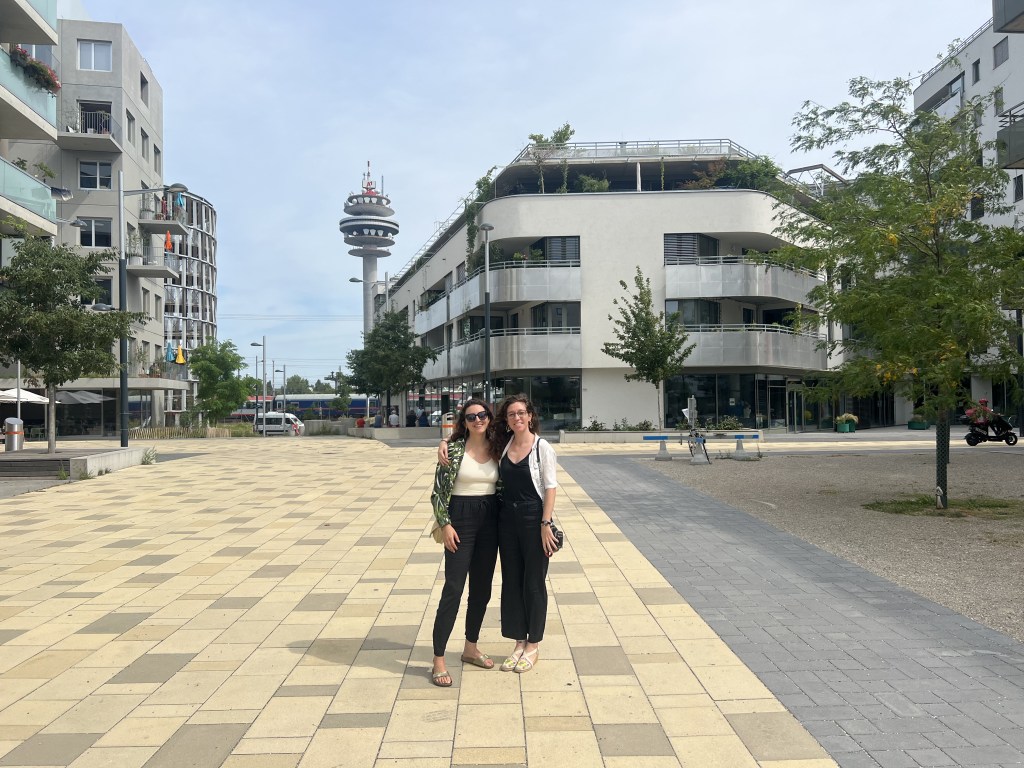
I found Grüner Markt through the local neighborhood association that is in charge of being the bridge of communication between all residents of a newly developed neighborhood and the city. I heard from them as I was looking for a place to live, and found this short term sublease. After a few months, I got to know my current roommate through community events and moved into an extra room she had available. It has been about a year and a half since I moved in with her, and about 2 years since I’ve lived in Grüner Markt. 🙂
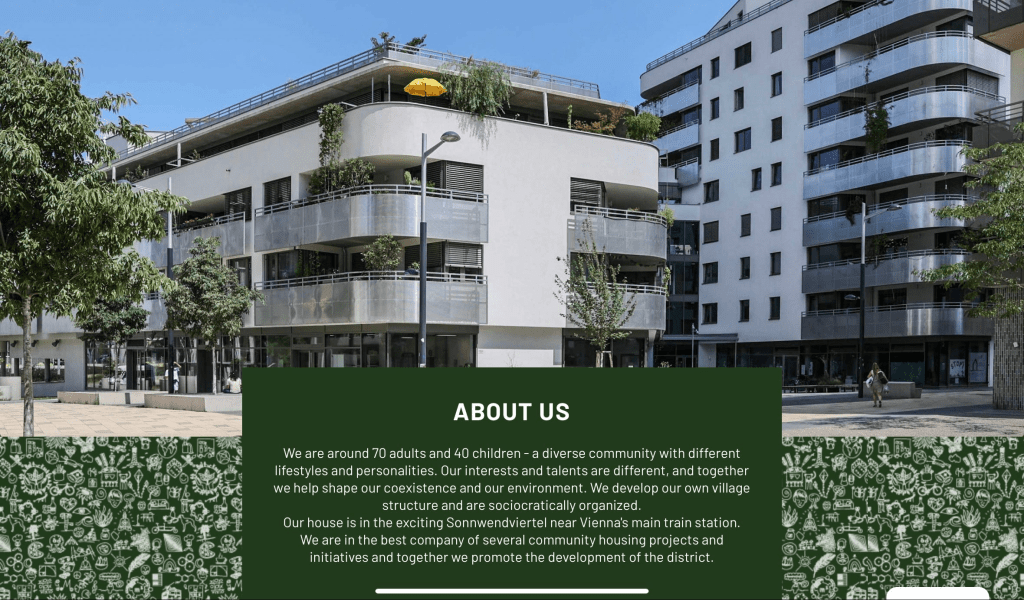
About Grüner Markt: The Facts
Here’s an overview of Grüner Markt and what makes it so unique:
First of all, it’s an absolutely mind-blowing building. It’s a playground both for the children and for the adults, and the quality of the materials and the building itself such as the insulation of all the windows, floor heating, and electronic shutters, is incredible.
Living Arrangements:
- No Rental Termination Date: Private rental units with open contracts (no fixed end date). This means everyone has the security of being able to live there for as long as they can pay rent. Rent is not capped.
- Family-Focused: 43 rental apartments, housing about 70 adults and 40 children.
Mixed-Use Development:
- Preschool, day center for people with disabilities, and two architecture offices on-site.
Resident Amenities:
- Social Spaces: Sauna, yoga room, kids’ playroom, ceramic studio, and three rooftop terraces with a garden and bbq.
- Mobility Solutions: Bike parking, two cargo e-bikes, and two electric rental cars available for a small hourly fee.
- Shared Resources: Community workshop, a food cooperative, and rooftop bees producing honey.
Democratic Structures:
Residents self-manage community spaces through democratic and problem-solving structures that ensure engagement, mutual respect, and collaboration. (See more in ‘sociocracy’ below!)
Grüner Markt in Context
Grüner Markt is part of a larger infill master-planned development, Sonnwendviertel. The development includes:
- Housing Mix: 4,300 apartments, with 50% designated as permanently affordable social housing.
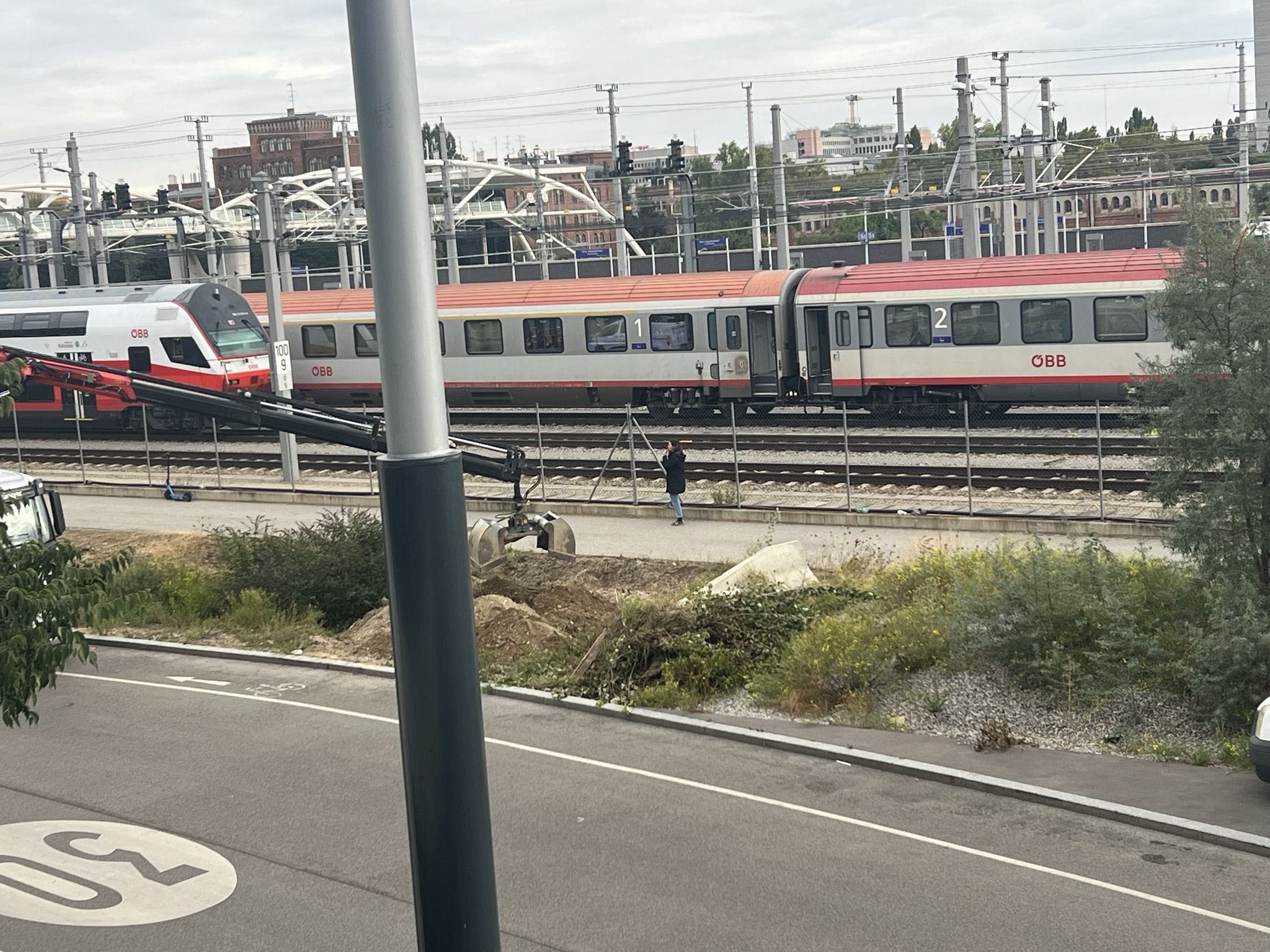
- Accessible Location: Adjacent to Vienna’s central train station, with public transit, a bike-sharing system, a pedestrian-friendly corridor, and plentiful retail spaces.
All centered around a wonderful public park, school, and light rail tram system that connects both the residents that live here, and the broader historically working class neighborhood.
Community in Action
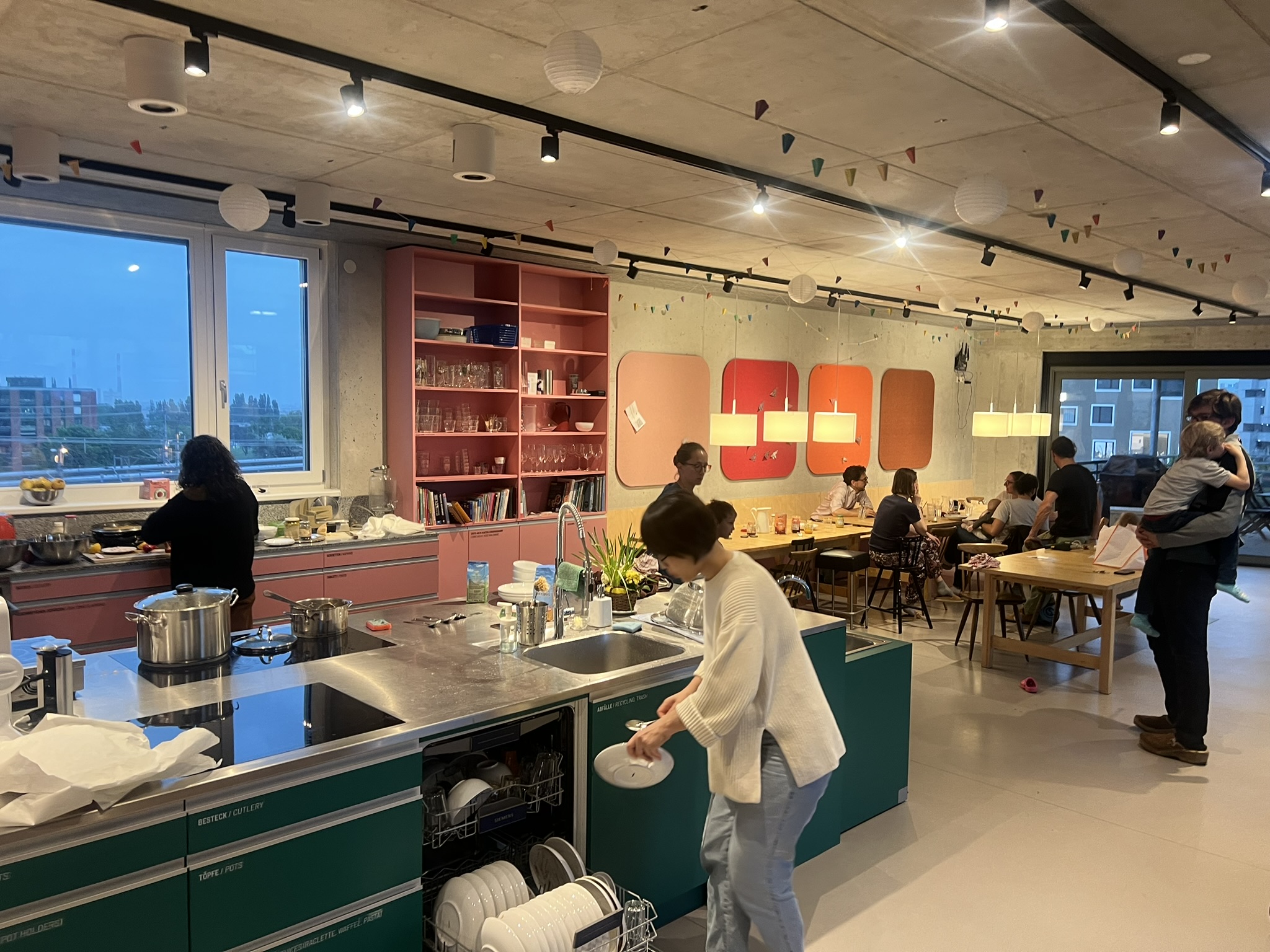
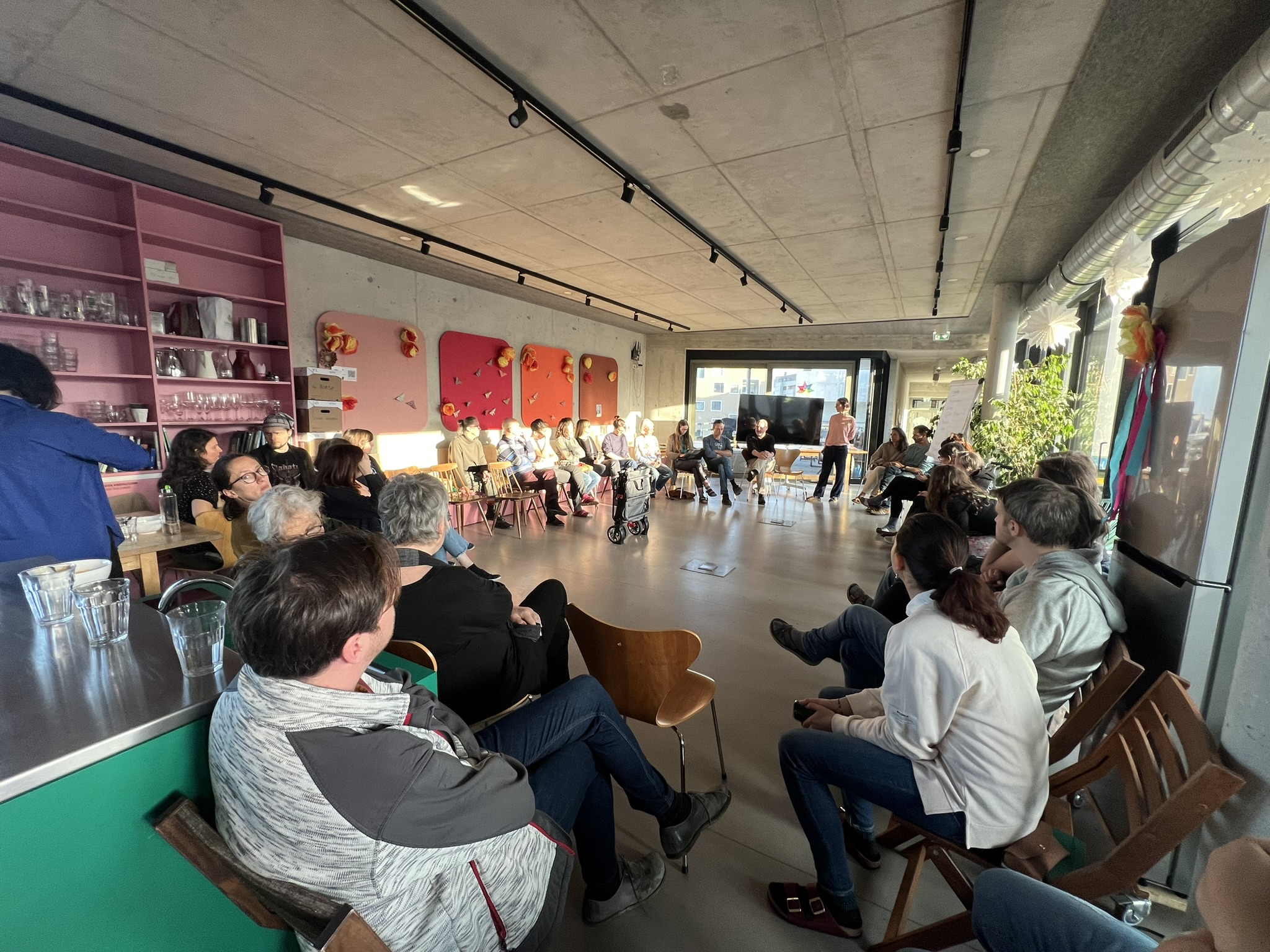
Grüner Markt thrives because of its “social connective tissue” that unites residents. For example, we coordinate shared use of our common spaces (like the kitchen in the photo) through tools like a shared Google Calendar. Because of a common vision and desire to co-exist and connect, all spaces feel really loved. Coming from private rental housing in California, where people frequently treat their home as a temporary shelter, many times disrespecting the common spaces, and not considering their neighbors, its hard to express how much of a refreshing alternative it is to see a collection of renters have a deep sense of respect, ownership, and pride for their collective home.
For more about our community and its values, check out our official website.
Built on public railway land, the project won one of the lots that were a part of the City of Vienna’s developer competition: a city held competitive ranking system where a developer submits a project proposal and a jury of experts rank applicants based on four markers: Ecology, Costs, Design, Social Sustainability. The winner receives the land to build their project.
Each unit has a unique floorplan, and turnover between the same residents of the building is not uncommon in Grüner Markt. Since my arrival there have been at least 6 households that have switched apartments (including me!) to better suite their changing needs. All this is self-organized and communicated through an incredibly long slack channel where you can find anything from someone needing last minute food ingredient, to a picture of a newborn/new neighbor, to broader Vienna and community events.
Housing with Self Defined Identity
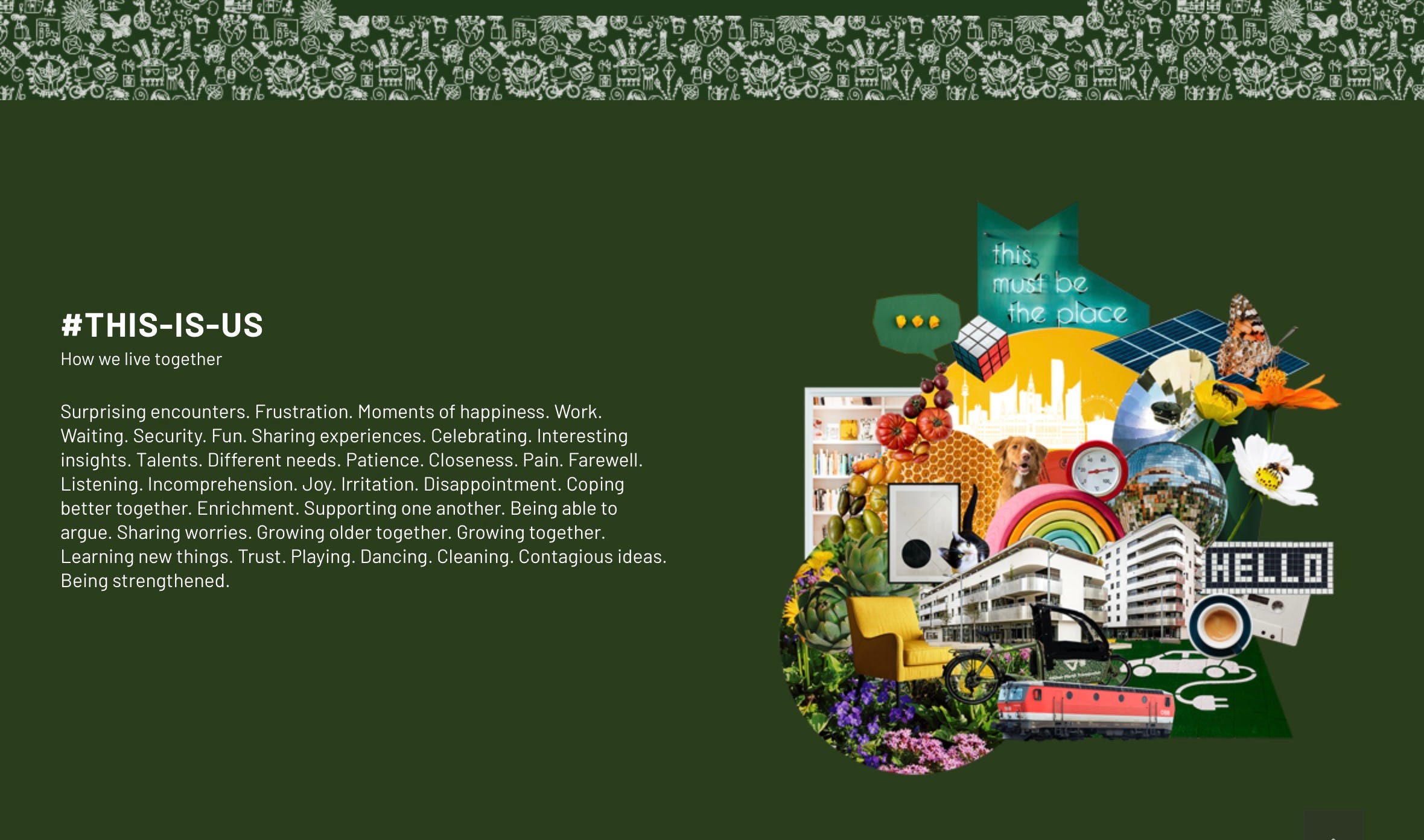
Grüner Markt is a self-defined community built on shared values and collective decision-making. Everyone who lives here commits to a common ethos, agreeing to participate in maintaining hte space, engaging in communication, and being part of the larger decision-making structure. While not everyone in the building is friends, and disagreements naturally arise, most residents share similar core values and political leanings—such as a firm belief in climate change as fact and support for centrist or left-leaning parties.
A Foundation Years in the Making
The community began forming even before construction was completed in 2019. Years of conversations among future residents helped build the “social fabric” of the space, where the decision-making structures and core ethos were carefully shaped. Input was also shared with the architects to ensure that the design of the common spaces reflected the community’s goals and values.
Finding Like-Minded Residents
Most new residents at Grüner Markt find their way here through word of mouth or posts on platforms where like-minded people tend to gather—think student websites, social media, or publications that lean left politically. This approach helps create a community that’s naturally aligned in its values, but it does have its downsides. It’s definitely more selective compared to Vienna’s municipal social housing system, where people apply through a centralized online process.
I found my way to Grüner Markt through a connection with the local neighborhood association, which had supported my research on Vienna’s social housing. While I’ll touch on some critiques later—particularly on how the process should prioritize diversity -race, ethnic, age, and socio-economic diversity specifically—it’s clear that this approach ensures that all who enter have a deep sense of ownership and desire to connect with each other. People here share a genuine pride in the community, and it shows. From the rooftop gardens to the shared kitchens, every common space is loved, well-maintained, and thoughtfully used by our group of over 100 involved residents.
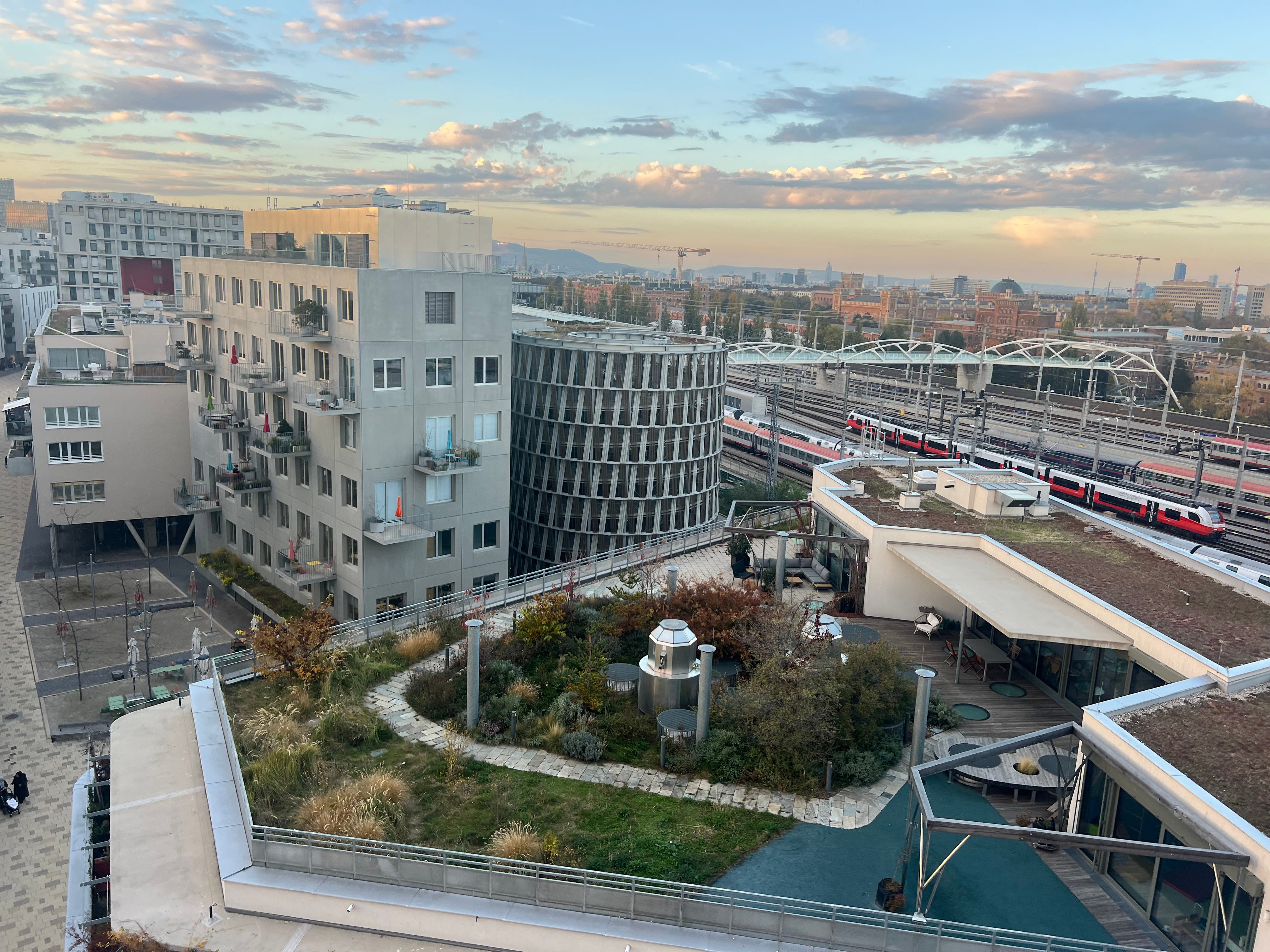
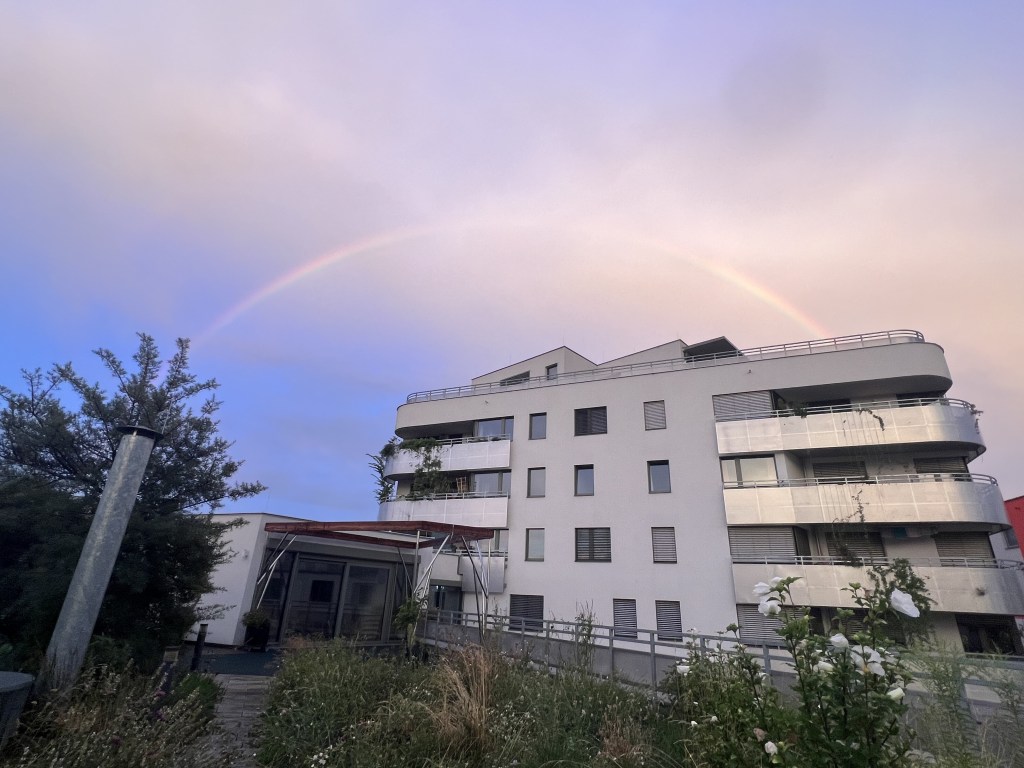
Picture above: rooftop terrace with native plants. Also shows train railways that lead to the central train station that is just a 15 minute walk from Grüner Markt.
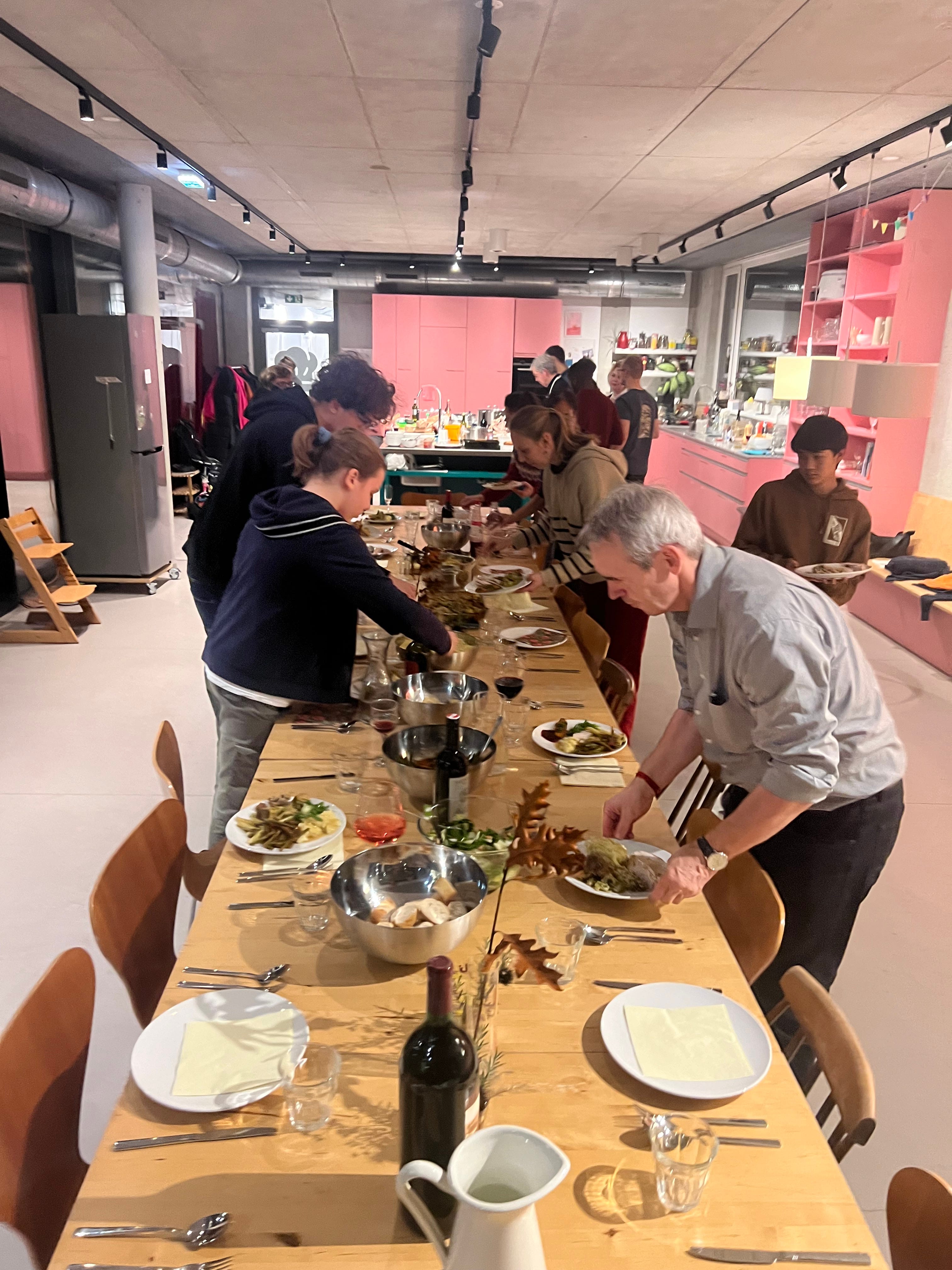
Picture Above: Thanksgiving dinner party 2024! The party was held in our community common kitchen. Designed to foster shared experiences, the common kitchen allows us to host larger gatherings while keeping our individual apartments size appropriate for the number of people living inside.
Decision Making Structure: Sociocratie
At Grüner Markt, decisions are made using a democratic process called Sociocracy. Unlike traditional majority voting, sociocracy is based on consent, encouraging collaborative discussions and decisions among people working toward a shared goal. (Please see the prior blog post for more details on Sociocratie and how it is implemented in this community.)
The system is organized into smaller groups, each responsible for specific areas or tasks. These groups are empowered to make decisions within their scope. If a major issue or disagreement arises, it is brought to the larger plenary circle, which meets every few months to address broader concerns and ensure alignment across the community.
Some Beautiful and Inspiring Moments I’ve had while living at Grüner Markt
Living at Grüner Markt has given me so many sweet moments that showed me this community is truly special. Here are just a few of those:
- Just last week there was a family that recently had a new baby. It’s tradition here that whenever there is a new baby, anyone that is able, cooks a meal and brings it to their door, giving them the space to focus on their little one during the first few weeks.
- At Grüner Markt, children are free to roam. All residents know and recognize each child, so there is a sense of collective supervision. I can’t imagine the peace of mind it must bring to parents knowing their kids can wander from apartment to apartment, without concern for their safety. It’s truly a haven for children. Every Tuesday there is the Kindertisch- or children‘s table- which is potluck dinner for all families and their kids.
- There are so many opportunities to get involved. Whenever someone has an idea, the first thing we do is ask the community. I’ve held a talk about social housing, movie nights, created a silent meditation group on Wednesday evenings (which is still going strong), and there’s a women’s sauna every Thursday evening. On Thursdays, there’s also a community lunch for just 5 euros, and plenty of holiday parties open to everyone.
- The spirit of solidarity is strong here. A few weeks ago, when a natural disaster hit my mom’s hometown of Valencia, Spain, I posted a fundraiser on the community Slack channel. My friend and I made enough gazpacho to feed 25 people, and together we raised 700 euros.
- I also do a weekly English-German exchange with an older resident here. Her grandchild speaks English, and I’m working on my German for my job in Austria. It’s great because she comes over to my place, and it’s just a 20-second commute! 🙂
- Every first Monday, one of our residents teaches how to sew and mend clothes, encouraging reuse rather than buying new.
- Leading up to Christmas, many families host little Christmas parties in their apartments, complete with cookies and mulled wine. It’s such a cozy, festive way to connect with each other.
- My neighbor lent me her guitar when she had her baby and needed to save space—she couldn’t bear to sell it. I didn’t have money to buy a guitar. I thought it was a brilliant solution.
- One weekend, I got a sudden urge to rollerblade, but rather than buying a pair I might never use again, I posted a message on Slack and found someone with my shoe size willing to share.
- When I first arrived, I know absolutely no German, didn’t have any friends, work colleagues, or family connections in this country, and was struggling with understanding the health care system and looking for a doctor. I posted on the community communication platform, and a few neighbors messaged me directly to understand my situation and guide me.
- When my aunt visited from Spain, we were cooking in the common kitchen when an older neighbor, who didn’t know me yet, aggressively asked if I lived there. Though the question itself wasn’t wrong, her tone felt unnecessarily harsh. At that time, I had been feeling disconnected and homesick, and the colder Austrian culture was hard for me compared to my California and Hispanic cultures. I didn’t like her for months. But over time, through the community’s spirit, we had the chance to reconnect, and what began as tension eventually grew into a friendship. It was a great example of how a community that produces opportunities to connect, despite differences, can lead to understanding and growth.
- There’s also the beauty of intergenerational living at Grüner Markt. Two families here live close to their parents, with the grandchildren happily flowing between apartments. This makes it easy for families to help one another, whether it’s lending a hand or simply spending time together.
These are just a few of the countless moments that show how truly unique this living experience is.
Attended a neighborhood concert in our common kitchen, hosted by Christian, a middle-aged neighbor who is neurodivergent and lives independently, with his mother living in a separate unit within the same building.
How do you create a community of invested neighbors?
It’s a question I’ve wrestled with throughout my time here because there isn’t a single answer—it’s a mix of many factors. But understanding these elements can help urban planners, activists, architects, elected officials, and community members who dream of building co-living projects recreate this sense of shared purpose and pride.
Unlike other shared housing experiences I’ve lived in in California, Ecuador, or Spain, Grüner Markt stands out because it’s supported by the city through access to public land and shaped by strong collaboration between residents, the developer/owner, and the architects.
Of course, there’s no universal blueprint. Every country has its own cultural norms, bureaucratic systems, and financing structures. As cities and countries wrestle with how to define what ‘social housing’ means to them, some include elements of tenant organization and even ownership. While Grüner Markt remains part of the private housing sector- it hasn’t received public funding for construction and isn’t protected by social housing laws- Vienna’s housing model is successful because of the diversity of housing typologies available to its residents. Grüner Markt is an exceptional example of an innovative private rental model.
I want to share a few key factors that I believe contribute to Grüner Markt’s strong sense of social cohesion and collective ownership -even through a renter framweork. Maybe these insights could inspire other collective housing projects around the world.
Community Origins and Design Input
Grüner Markt is a relatively new project, completed in 2019, and many of the current residents were involved from the very beginning. They participated in early discussions about the community and even influenced the building’s design. Their input shaped features like the common rooms and shared spaces, fostering a deep sense of connection and ownership. This collaborative approach has helped cultivate a high level of engagement and care for the space.
Downpayment and Kitchen Investment
A few structural elements also enhance this sense of ownership and personal connection. Similar to Vienna’s limited-profit housing model (one of the two primary types of social housing), residents must make an upfront downpayment, typically ranging from €10,000 to €40,000, depending on the apartment size. While this amount is returned—minus 1% per year—if a resident moves out, it encourages long-term commitment to the community.
Another factor is the requirement for residents to purchase and install their own kitchen cabinets and appliances. This process can be cumbersome, as new tenants must arrange and cover costs themselves. For instance, my roommate ordered a custom-fitted kitchen from IKEA upon arrival using the provided measurements (see photo). The expectation is that outgoing tenants will sell their kitchen setup to the next resident. These personal investments contribute to a stronger attachment to the space, both practically and emotionally.
Activities and Communication
Everyone in this building is super invested in the community. We’ve got Slack channels for everything—activities, last-minute “who has an egg I can borrow” asks, you name it. There’s a monthly DIY sewing class in the ceramics studio, and I started a weekly silent meditation group that’s still going strong even after I stepped back. Yoga classes? Check. Thursday lunches cooked by the lovely older ladies of the building? Absolutely. Holiday parties? Of course. Plus, all the common spaces are super easy to book through a shared Google calendar, so it’s simple to keep everything organized.
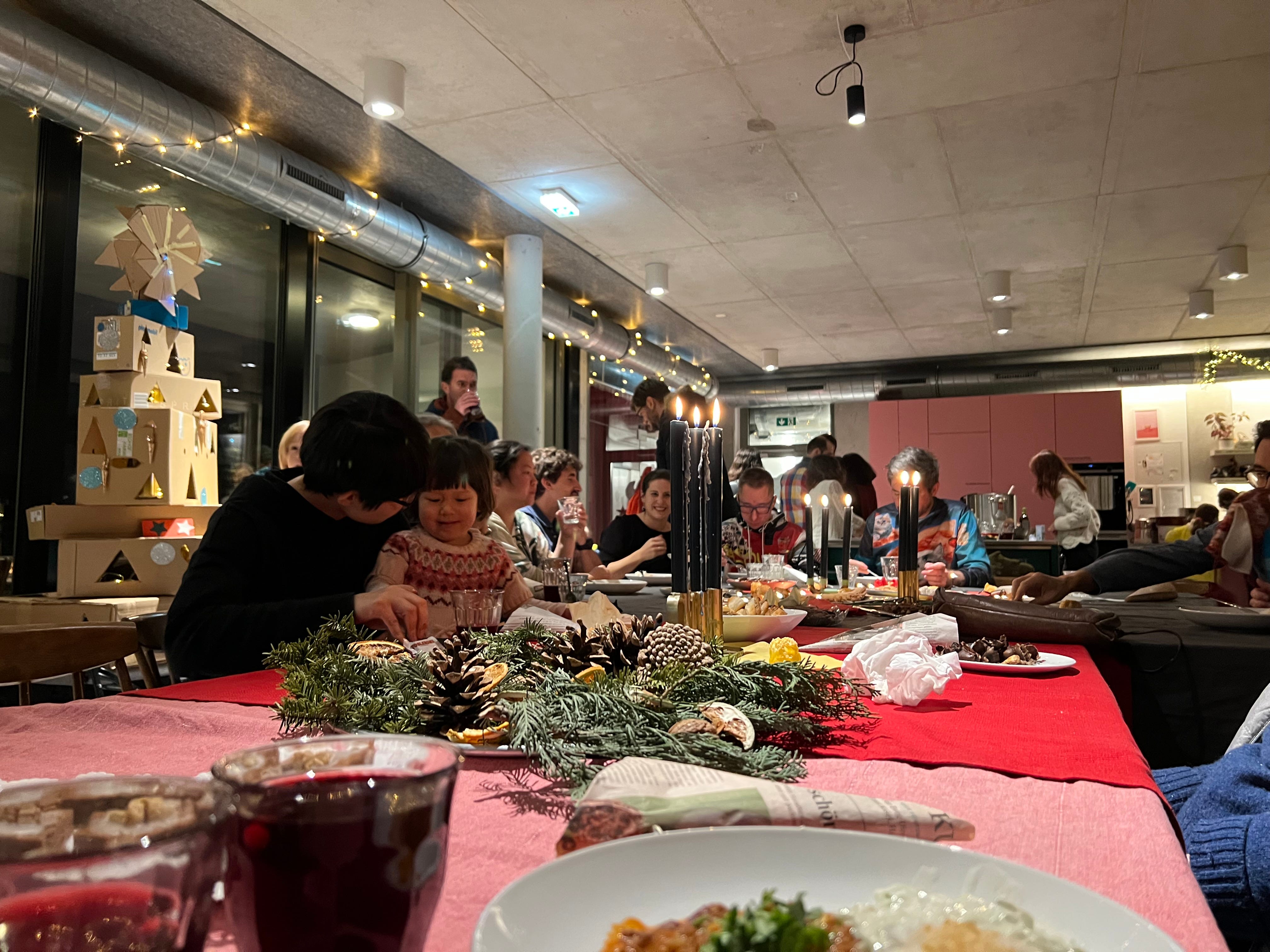
Pictured above: Grüner Markt Community Christmas Party 2023
Shared Cleaning and Maintenance
In this community, everyone pitches in to keep shared spaces clean and well-maintained. Every 2-3 months, I’d get a notice that it was my turn to clean a specific room. It’s amazing how personally invested everyone is in caring for our shared home. Even though we’re all renters, people treat the common spaces with a sense of pride and collective ownership. And once you’ve cleaned a space, you’re naturally more motivated to keep it tidy and encourage others to do the same.
Community Fund
Our rent includes a built-in community fund that helps cover maintenance and purchases for shared needs. For instance, there were long (and sometimes spirited) discussions about switching to photovoltaic energy systems—a renewable energy investment that would come from the fund. Another project funded last year was the introduction of rooftop beehives, which not only produce award-winning honey but were also shared with all the residents. This fund gives us real power to shape projects that reflect our community’s values. Of course, with so many strong opinions, decisions can take a while—but that’s part of the fun!
Unlimited Rental Contracts
At Grüner Markt, all tenants have unlimited rental contracts, meaning there’s no set termination date. This provides a sense of security—no one has to worry about being forced to leave by the landlord. However, because these units are privately owned and weren’t built using public funds, they’re not subject to Vienna’s social housing regulations, such as rent controls or eligibility criteria.
That said, rents here haven’t spiked as dramatically as the private sector. Some factors that contribute to this is that the owner is a mission-driven Limited Profit Housing Association—one of Vienna’s main social housing developers— so it’s broader interest isn’t to maximize profits, and the broader city social housing stock helps keep the overall rental market more affordable compared to cities without social housing. While Grüner Markt operates outside social housing frameworks, its open-ended rental contracts are a shared feature with social housing projects, fostering stability for tenants.
Embedded Communication Infrastructure
Grüner Markt has incredibly active slack channels. They’re used for everything you can imagine: parents giving away last-minute concert tickets because their kids are sick (yes, that actually happened); someone offering a RV or camper van as a loan (also a true story); or just organizing fun activities on the fly. Of course, things occasionally get heated in these chats, but when that happens, the group often encourages in-person conversations to smooth things over.
Critiques
As with anything in life, nothing is perfect. Here’s what I’d love to see change to increase access and diversity if I had the agency to make it happen:
The Downpayment Requirement
The required downpayment for moving in means that Grüner Markt tends to attract middle- and upper-class renters. While Vienna’s social housing offers city-backed loans to help those who can’t afford the downpayment, Grüner Markt isn’t classified as social housing, so this option doesn’t exist here.
Language as a Barrier
If you don’t speak German, it’s tough to participate in decision-making processes or engage fully with the community. Some other cooperative communities in Vienna use both English and German in general assemblies and key communication channels to increase accessibility for immigrants, as English is often a common second language. While learning German has made it easier for me, using translation apps or tech tools could make participation more inclusive for non-German-speaking residents, both current and future.
Lack of Socio-Economic, Race/Ethnic, and Age Diversity
Moving in requires approval from the community, and available rooms aren’t often advertised widely, which can create an insular pool of people who recieve notice when a spot opens up. Coupled with the downpayment requirement, this has led to a relatively homogenous demographic—middle-to-upper-class, predominantly white, and mostly 40+ year-old Austrian families. The few younger residents, or younger couples, typically have financial support from their parents to cover the downpayment. While it’s important to vet new residents to ensure they align with the community’s values and commitments, I think the community could do more to spread the word to diverse circles about availability, and maybe consider a fund to support this mission. Of course, any new residents should still share the community’s ethos, be committed to caring for shared spaces, and be prepared for the patience needed in collective decision-making.
Recommendations
To increase socio-economic diversity, part of the community fund could be allocated to assist new residents with the required downpayment. Similarly, a fund could be created to support existing residents facing temporary financial difficulties, helping them cover rent during tough times.
Goodbye Grüner Markt!
As of January 2025, after a year and a half in this wonderful community, it’s time to say goodbye. I’m moving just across the way to another decommodified housing project called Bikes and Rails!
This neighborhood, Sonnwendviertel, is home to three unique community projects, and I’m excited to serve as a “living lifeline” between them, fostering stronger connections across these like-minded spaces.
Stay tuned for another post about Bikes and Rails, a cooperative ownership model more centered on class solidarity and empowering communities to buy and/or build their own housing outside the private market. 🙂
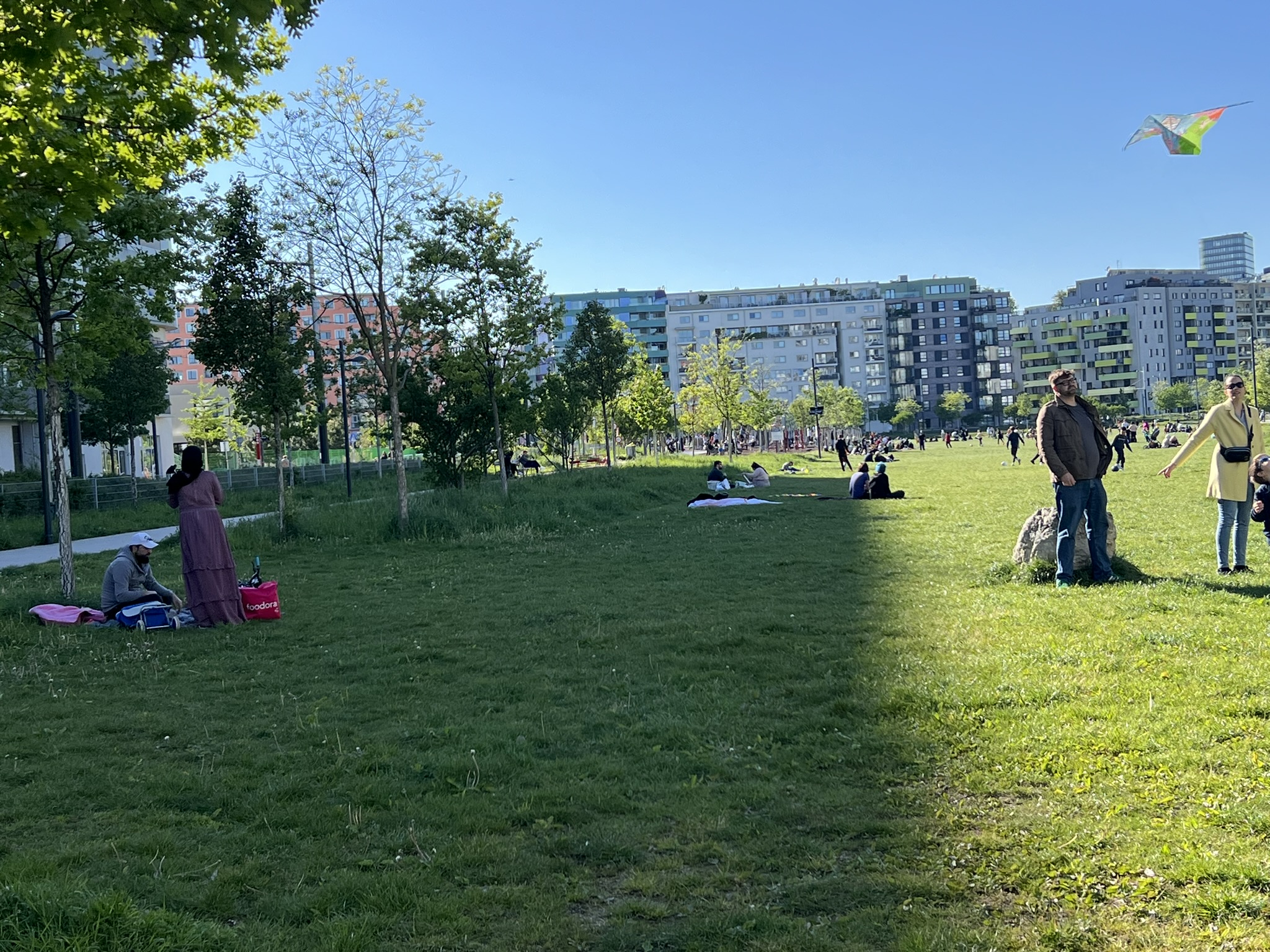
Picture this: On warm weekends, you stroll through the local park and hear 3–5 different languages being spoken. People of all ages and ethnicities fill the space—the joyful sounds of children running, young people playing cricket, women chatting over picnics, and families gathered in circles to celebrate birthdays. Every eight minutes, the light rail tram glides by, seamlessly connecting the community with the broader urban fabric. All of this is surrounded by over 2,000 units of permanently affordable housing, nestled within a broader neighborhood rich with social housing.
This is Vienna—a city where housing as a human right is a concept that is alive in vibrant, tangible ways.
 The Urban Commons
Leave a comment